

When speed is the key: taking the first steps with Wayby
Speed only matters when the foundation is right, especially in website personalization where execution speed directly affects learning and results. Wayby is built for a specific problem in modern marketing: teams need to move from ad click to measurable website impact without stitching together tools, waiting on developers, or guessing what works. That is why Wayby connects ad-driven website traffic, analytics, and conversions into a single workflow for faster execution and learning.
Speed-to-value as the core KPI in website personalization
Traditional marketing stacks slow down learning and validation. Campaigns take too long to launch, data is scattered across tools, and insights arrive too late to guide decisions, no matter how many features are available. Wayby reduces execution friction between ads and website personalization. By connecting campaigns, landing pages, A/B testing, and analytics into a single workflow, teams can see how visitors from each ad interact with content and convert. This enables faster validation of audiences and messaging, and prevents budget from being spent on unvalidated ICP assumptions.
Campaigns as the central execution layer
By giving teams a single point of control over what goes live and when, Wayby helps teams launch campaigns faster and with clarity from the beginning. With campaigns acting as the operational center, teams make decisions about experiences, triggers, and measurement once and apply them consistently. This allows teams to move from configuration to launch without coordination delays, maintain confidence in what is running, and adjust execution quickly without reworking multiple systems.
Creating a campaign in minutes
Creating a campaign in Wayby requires only a few inputs
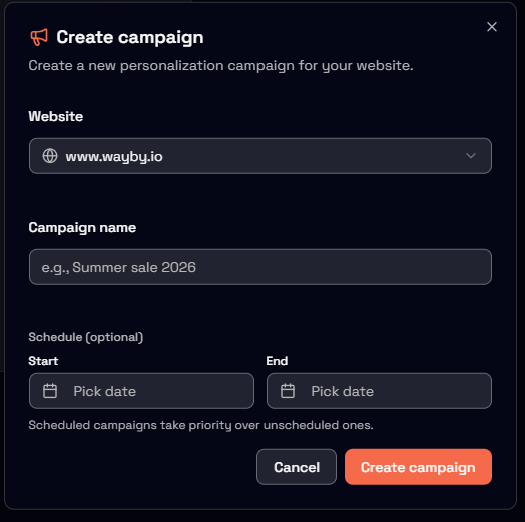
Once saved, teams can immediately use the campai to host landing pages and logic. By reducing time from days or weeks to minutes, Wayby increases iteration speed and allows learning to happen continuously instead of in isolated campaign cycles.
Landing pages as reusable campaign assets
Because team link landing pages instead of rebuilding them, they can reuse the same page across multiple campaigns. They connect existing pages to campaigns and add campaign logic, which lets them move fast without creating everything from scratch.
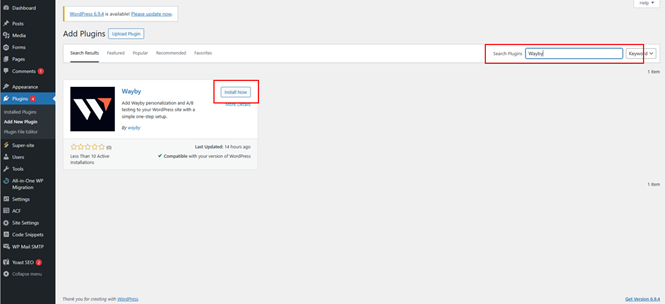
In practice, adding a landing page includes:
Why UTMs matter for instant personalization
UTM parameters carry the intent defined at the ad level, such as campaign message and ICP, into the website visit. Wayby uses this context directly to decide which experience to show, so personalization reflects why the visitor clicked the ad. Because this context comes with the traffic, teams do not need to recreate audiences or set up additional targeting logic across tools. Setup stays lighter, and execution becomes easier to manage.
From first conversion signal to continuous optimization
In Wayby, teams define conversions upfront when the campaign and landing page are created, so meaningful signals can be captured from the first visits. They can begin to see which audiences respond and which messages do not. These early signals help teams confirm whether the campaign is reaching the right ICP while it is still running. Over time, campaigns shift from one-time launches into a more continuous rhythm of improvement. This creates a continuous optimization loop across campaigns.
Speed as a structural advantage, not a feature
Speed in Wayby comes from how the platform is built, not from a feature that can be switched on. Campaigns, pages, personalization, and measurement work in a single flow, reducing the handoffs and waiting points that slow teams down. Many existing technologies rely on separate systems, which means even small changes require extra coordination. By reducing this structural friction, Wayby enables faster launches, earlier insights, and quicker decisions. This makes website personalization faster, more consistent, and easier to scale across campaigns.
Start your first campaign with Wayby
Wayby is built to connect campaigns, personalization, analytics, and conversions into one workflow. This helps teams move from ad-driven traffic to measurable website impact faster, validate ICP and messaging earlier, and optimize continuously instead of in isolated cycles
Move from ad-driven traffic to measurable website impact faster with one connected workflow.