

Why speed matters more than perfection in website optimization
Website optimization is about turning traffic into results, not endlessly spending hours on polishing pages. Under real campaign pressure, marketers rarely have time for perfect setups. They need changes that go live fast. The problem is that most optimization tools are slow, fragmented, and break when speed matters most. That’s why Wayby is built around a single workflow that connects ad-driven traffic, on-site behavior, and conversions in one place, so optimization can happen continuously without manual setup, handoffs, or waiting for reports.
1. Do marketers really have time for perfection?
In real marketing environments, perfection is a luxury most teams simply don’t have. According to our research 89% of marketers skip one or more steps in their workflow when time is tight, not because they want to, but because deadlines, live campaigns, and budget pressure force fast decisions. As a result, perfection-focused processes collapse under real campaign pressure, which leaves teams to improvise with shortcuts instead of optimizing with confidence.
2. A/B testing should start on day one
A/B testing loses much of its value when it becomes a separate project instead of a built-in part of execution. Manual setup, developer dependencies, and delayed launches slow teams down and push testing to the end of the campaign. Testing should begin as early as possible, not weeks later when momentum is already lost.
3. Speed validates ICPs faster than assumptions
Targeting decisions based on assumptions often cause marketers to waste budget on the wrong audience segments. Our research also shows that 46 percent of marketers describe their current end-to-end workflow as painful, which makes proper ICP validation difficult and inconsistent. Slow validation cycles force teams to keep spending before knowing what truly works. Faster testing changes this by quickly revealing which ICPs actually respond and convert, allowing data-driven decisions to replace guesswork and improve campaign performance.
4. Campaigns Move Fast and Websites Must Keep Up
Campaigns are never static. Ads change quickly, and audiences shift over time. In many legacy setups, campaigns follow a rigid hierarchy, ads are managed in one system, landing pages are created separately, and analytics live somewhere else, forcing teams to wait for handoffs and approvals before making changes. When websites cannot adapt at the same pace as campaigns, they fall out of sync with the messages and promises made upstream.
5. Speed fails only in broken systems
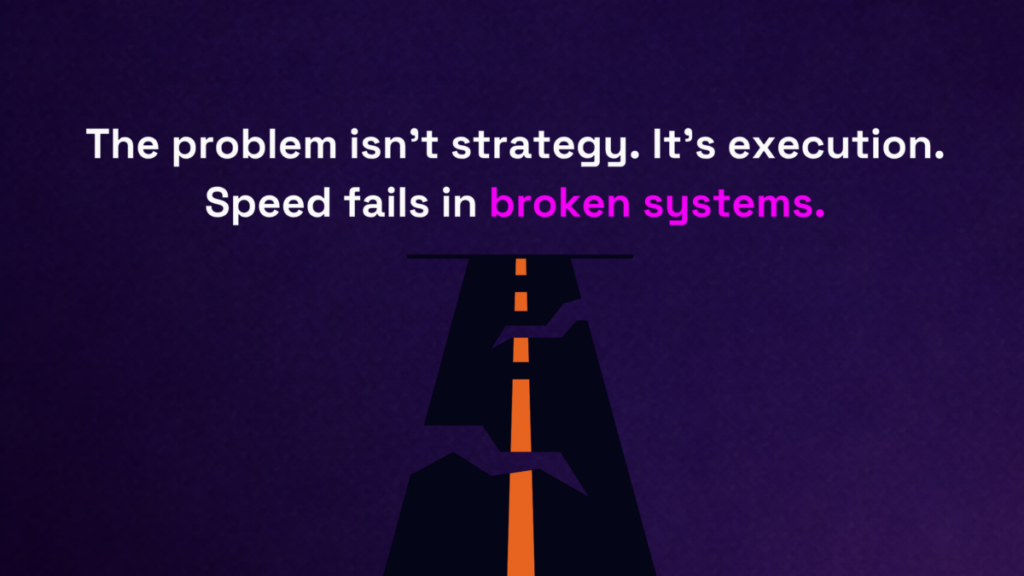
Fast execution does not mean sloppy execution when the underlying systems are connected. Speed breaks down when tools are disconnected and teams are forced to jump between ad managers, analytics platforms, and website editors. A unified platform removes this complexity by enabling fast and accurate execution from a single system.
6. Perfection delays learning, but speed creates feedback
Chasing flawless pages often slows down learning because real user signals arrive too late. A single polished landing page tested once delivers limited insight, regardless of how good it looks. Fast iterations, on the other hand, generate continuous feedback from real traffic and reveal what actually drives conversions.
7. The problem is not strategy, it is execution
The biggest obstacle in website optimization is not a lack of knowledge but execution friction. Best practices are widely understood, yet they are rarely followed because manual setup, coordination, and tool switching consume too much time. As execution slows down, landing pages remain generic instead of adapting to different audiences which makes optimization feel complex and delays action when speed matters most.
Stop planning for perfection and start optimizing in real time
Wayby is built around a speed-first optimization mindset because modern marketing cannot wait for perfect plans. By bringing ads, analytics, and personalization into a single flow, it removes the delays caused by switching between disconnected tools. Campaigns can be launched in minutes instead of weeks. Continuous feedback from live traffic replaces slow, perfect planning with fast, data-driven improvement.