

Why websites often fail to convert paid traffic
When paid traffic is not converting, the first assumption is often that the ad is weak, the offer was not compelling enough, or the page itself did not perform. Sometimes that is true. But in many cases, the real issue begins in the transition between the post-click and the landing page experience.
A paid visitor does not arrive without context. They come from a message that has already framed a problem, promise, or opportunity in a specific way. That affects how visitors interpret the page from the first moment. This is why many conversion rate optimization (CRO) problems are rarely just website problems in isolation. More often, they are caused by a disconnect between what the visitor expected to find and what the landing experience actually delivers.
How to fix landing page conversion issues
A visitor from paid search usually arrives with a clearer expectation than someone browsing more broadly. They clicked for a reason. Something in the message, offer, or framing felt relevant enough to act on. That matters because visitors do not judge the landing page independently. The visitor is already comparing what they see with what they expected to find. If that alignment is weak, uncertainty enters the experience early, and the page has to work harder to establish clarity, trust, and forward movement.
Top reasons landing pages don’t convert
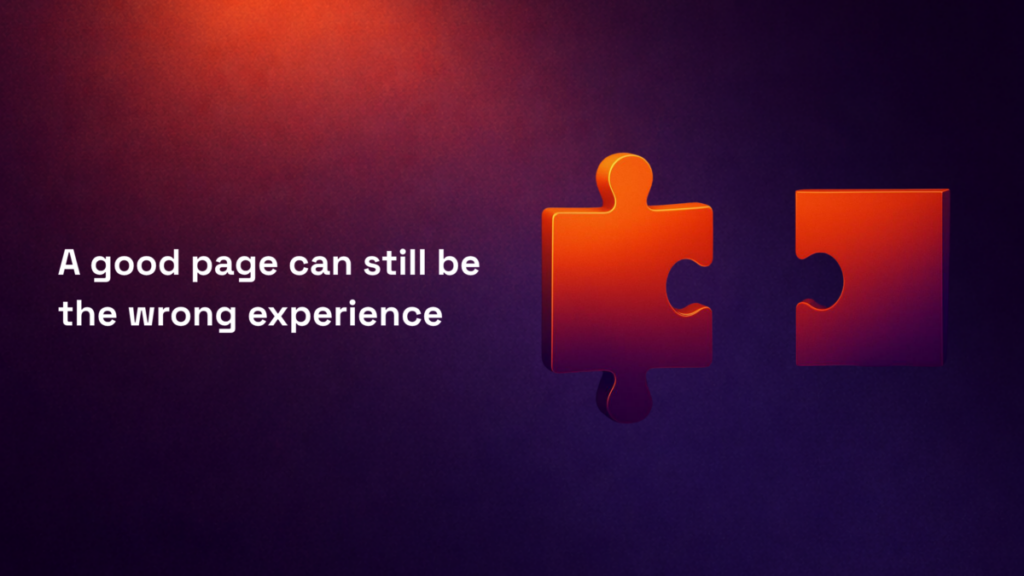
Paid traffic rarely underperforms because of one dramatic mistake. More often, results weaken through several smaller disconnects that happen early and build on each other.
1. The message changes too abruptly after the click.
A landing page does not need to repeat the ad word for word, but it should feel connected to the reason the visitor clicked in the first place. Problems begin when the message on the page opens from a different angle, shifts into broader brand language too quickly, or assumes a different level of intent than the campaign created. Even when the offer is still relevant, that extra interpretive work weakens the experience at the point where it should feel most aligned.
2. The landing experience feels too general.
Many teams build pages to serve multiple audiences, use cases, or traffic sources at once. That can make them broadly usable, but not especially convincing for paid traffic. A visitor who clicked on a specific message usually responds best to a page that feels equally specific. If the landing experience is too broad or too detached from the original context, the page may still make sense, but it does not create enough relevance fast enough.
3. Clarity and trust do not appear quickly enough.
People should not have to work hard to understand what a page is offering, who it is for, or what to do next. When those signals are delayed or unclear, the page starts from a position of doubt rather than confidence. If visitors have to search for meaning, the website bounce rate increases and interest starts to erode before conversion has had a real chance to happen.
4. Friction slows action before interest becomes intent.
Friction is not only about long forms or too many clicks. It also comes from mental effort. When the page asks the visitor to process too much or decide too much too early, the path forward becomes heavier than the click prepared them for. Even a relevant offer can underperform when the page introduces too much resistance too early.
5. Teams optimize parts of the experience without fixing the disconnect between them.
When paid traffic does not convert, teams often respond by improving individual parts of the experience. They adjust ad copy, test new creatives, rewrite headlines, apply different conversion rate optimization strategies, change layouts, or simplify forms. Those changes can help, but they do not always address the real source of the problem. If the disconnect begins in how the campaign frames the click, how the page receives that visitor, or how the next step fits the original intent, isolated improvements only solve part of the issue.
This is a structural problem, not just a page problem
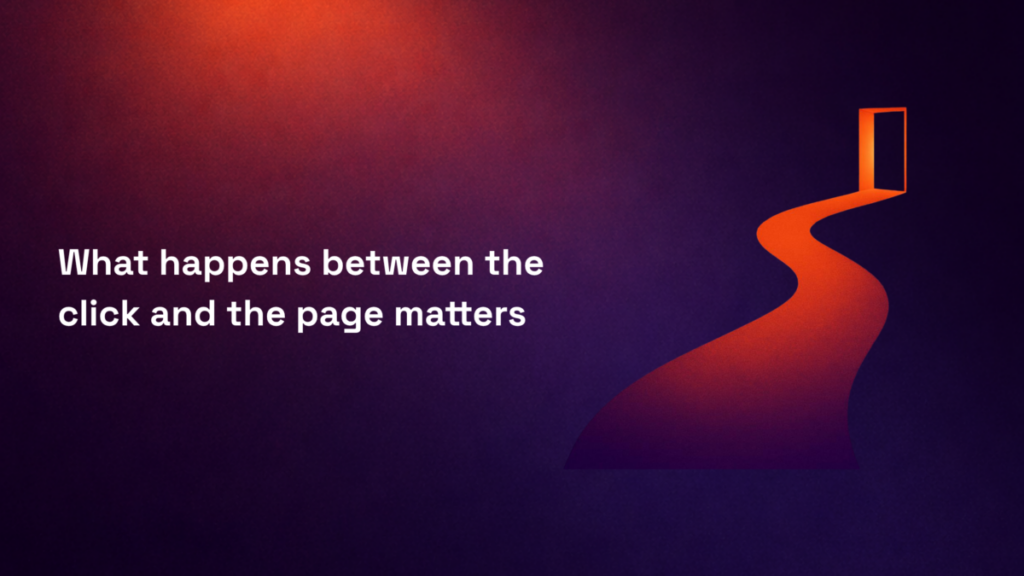
Even well-optimized landing pages can underperform when they are not aligned with user intent. The campaign creates the entry point, the click carries intent, and the landing experience then needs to make that intent easy to continue. If those parts are not aligned, performance suffers even when the individual elements seem reasonable on their own.
This is why teams should not treat weak paid conversion only as a landing page issue. It is often a structural issue across the journey. The problem is not always that one part is clearly wrong, but that the parts do not support each other well enough to move the visitor forward.
What better post-click experiences look like
Better post-click experiences do not depend on tricks or excessive optimization. They work because the experience feels coherent from the beginning. The visitor can quickly understand where they are, why they are there, and what to do next without rebuilding the context for themselves. In practice, that means the landing experience stays connected to the message that generated the click, reflects the visitor’s likely context clearly enough to feel relevant, makes the offer and next step easy to understand, reduces doubt, and helps teams learn from the path as a whole rather than from isolated elements alone.
Websites often fail to convert paid traffic not because the click had no value, but because the experience after it does not make enough sense, fast enough, for the person who arrived. That is why paid traffic conversion should not be treated only as a page-level problem. Teams should understand it as a connected experience problem. When the transition from campaign to landing experience is stronger, businesses can significantly improve ROI on ads. It can do the job it needs to do.